Skip to content
Keenan SprouseSound Wood Field Manuals

A practical manual by Keenan Sprouse

Find sound wood before you clean or replace it

Grey boards are not always rotten, and clean-looking boards are not always safe. This manual helps you inspect the structure, choose the right cleaning method, protect exposed framing, and maintain outdoor wood according to its condition.

Pop’s Bottom-Up Rule

PDF

65 pages · 8 chapters · 1 ten-year maintenance plan

The Deck & Fence Survival Guide

65-page PDF edition

8Chapters
65Pages
$19Your order

Sound Wood Field Manuals

The trouble often starts before the stain goes on

Outdoor wood gives mixed signals. The color may be harmless, while softness, movement, trapped water, or a failed connection points to work that cleaning cannot settle.

  • A silver-grey deck looks spent, but the boards are still firm and may need careful cleaning rather than replacement.
  • Black marks resemble mildew, yet their position around screws or brackets suggests iron-tannin staining or trouble beneath the surface.
  • A pressure washer removes the grime and also cuts stripes into soft earlywood, raises fuzz, and turns cleaning into repair.
  • Fence boards stay wet at grass and mulch lines, while cleaner runs down the face before it has enough contact time to work.
  • A neat top surface hides soft joist ends, debris pockets, loose connections, or decay around a ledger, beam, post base, or stair support.

The book

The Deck & Fence Survival Guide

The Deck & Fence Survival Guide

The book / 01

The Deck & Fence Survival Guide

The Practical Wood-Restoration Manual for Cleaning, Protecting, Staining, and Ten-Year Care

Diagnose the wood first; then clean, repair, protect, or monitor according to the evidence.

The Deck & Fence Survival Guide is a 65-page PDF for homeowners who want to judge outdoor wood before buying cleaner, stain, or replacement boards. Its 8 chapters move from a ten-minute inspection through oxygen-bleach cleaning, vertical-fence work, decay checks, borate treatment, finish selection, preparation, and ten-year care. You will find Pop’s Bottom-Up Rule, a measured cleaning recipe, finish and protection comparisons, inspection checklists, a pigment matrix, and a maintenance ledger. The emphasis stays on firm wood, tight connections, controlled chemistry, drying paths, thin coats, and knowing when movement or softness means the structure should not be treated as a cosmetic job.

Selected chapters

  1. Before You Touch the Wood
  2. Grey to Gold Without Grinding the Grain
  3. The Standing-Wall Problem
  4. Where Rot Begins
  5. Borates, Barriers, and Drying Paths
  6. The Pigment Rule
  7. Preparation Is the Finish
  8. The Ten-Year Survival Plan

Selected chapters

Start with the problem in front of you

You do not have to read the manual as though every deck and fence needs the same treatment. These entry points take you from visible symptoms to the right preparation and maintenance work.

  1. Decide whether the wood is sound

    Begin with “Before You Touch the Wood.” Use the ten-minute inspection to check softness, movement, fasteners, surface color, drainage, and hidden areas before bringing out cleaner or stain.

  2. Clean without cutting away good grain

    Move to “Grey to Gold Without Grinding the Grain” for horizontal boards or “The Standing-Wall Problem” for fences. Follow the measured oxygen-bleach workflow and Pop’s Bottom-Up Rule instead of relying on high pressure.

  3. Protect the repair and record the work

    Use “Borates, Barriers, and Drying Paths,” “The Pigment Rule,” and “The Ten-Year Survival Plan” to address exposed framing, choose a finish by exposure, and log what was repaired, cleaned, or coated.

Look inside

Open a page and read the method

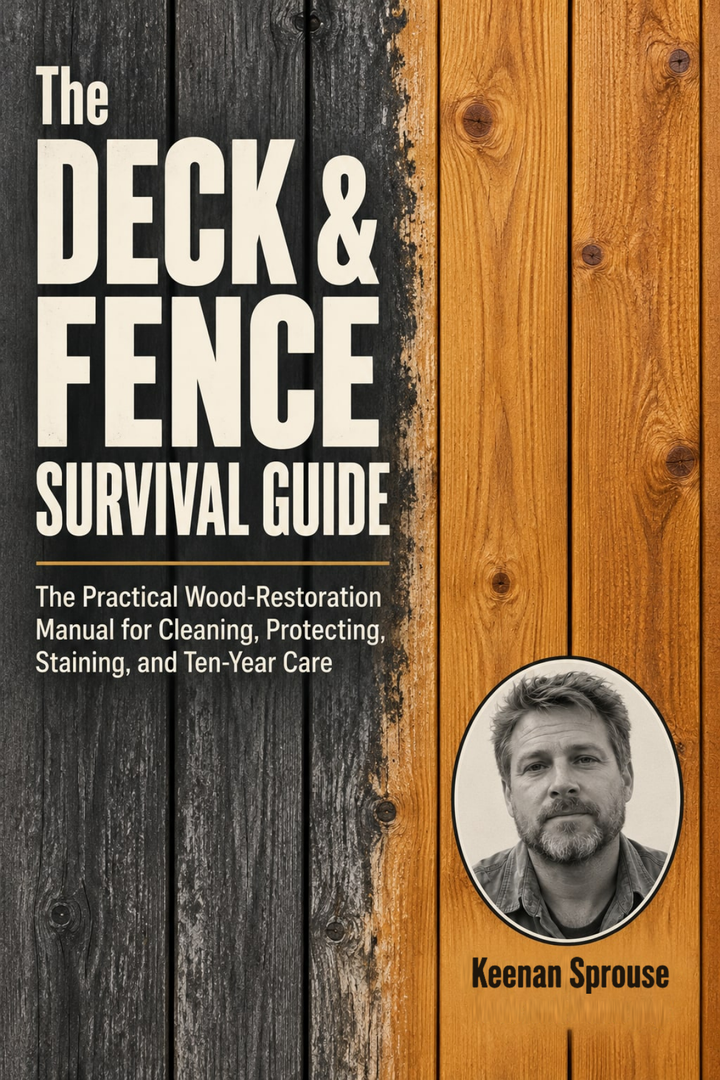
The cover, author portrait, sample pages, and reader illustrations let you examine the book’s plainspoken approach. The previews show field definitions, an inspection path, concrete tool lists, surface clues, safety decisions, and the story behind Keenan’s habit of looking below a tidy surface.

65 pages · 8 chapters · 1 ten-year maintenance plan

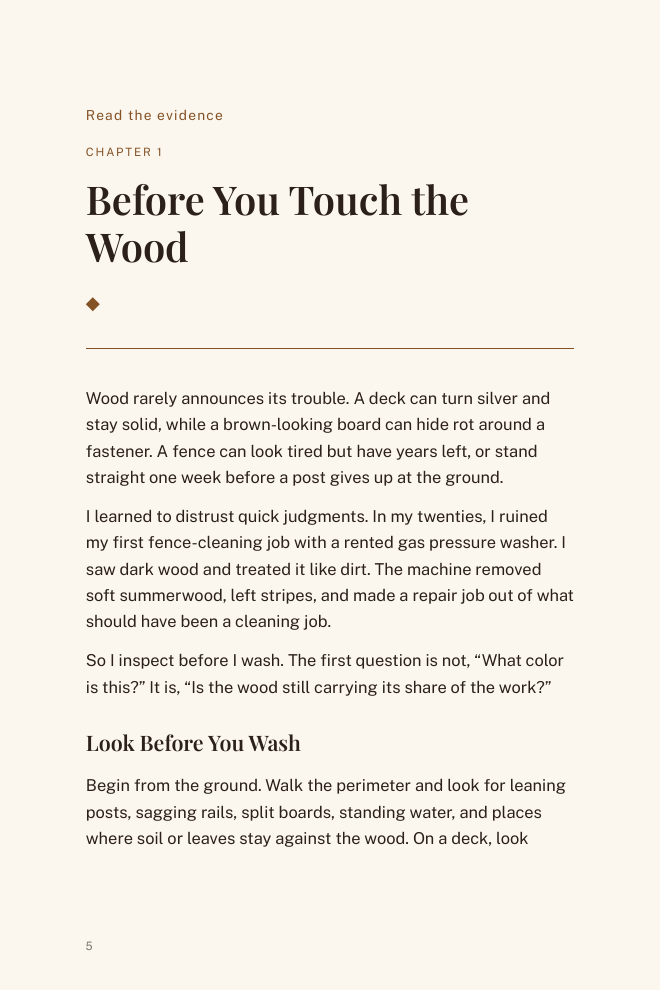
Page 5 — Before You Touch the Wood
Page 5 — Before You Touch the Wood ↗
Page 13 — Grey to Gold Without Grinding the Grain
Page 13 — Grey to Gold Without Grinding the Grain ↗
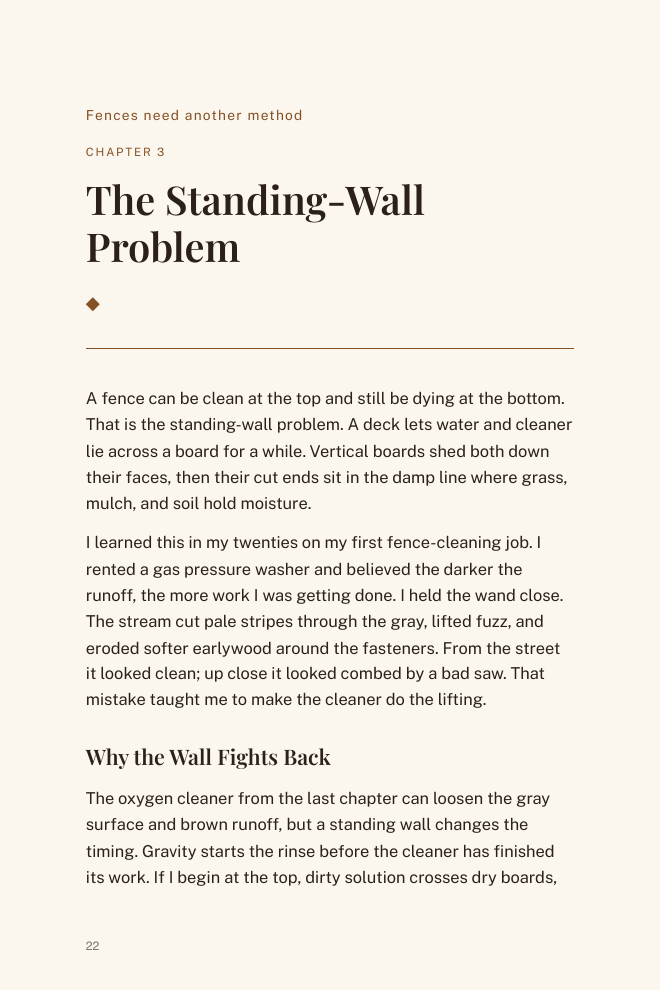
Page 22 — The Standing-Wall Problem
Page 22 — The Standing-Wall Problem ↗
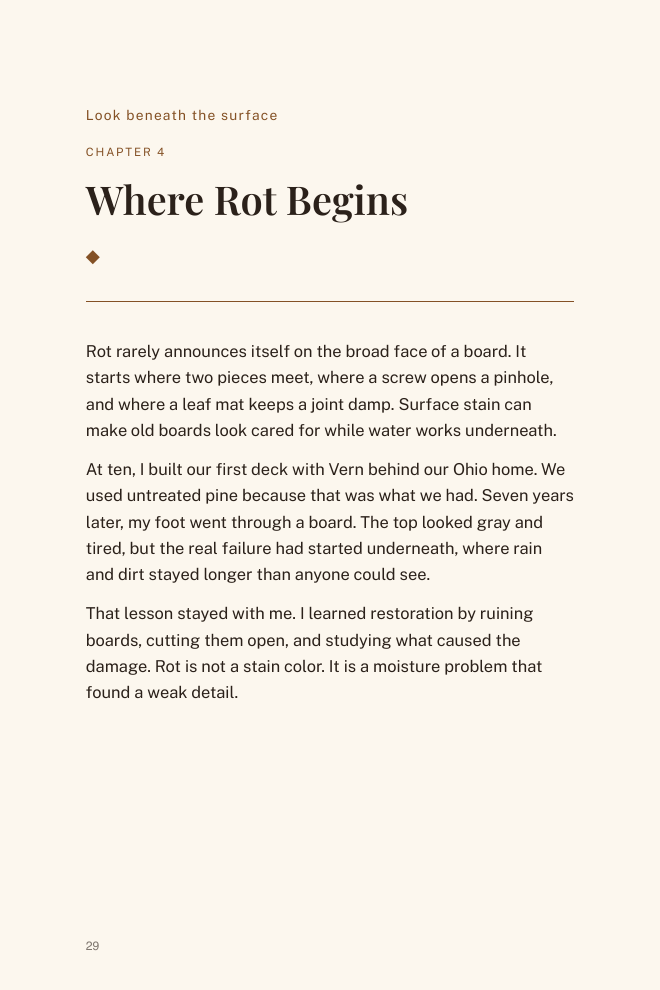
Page 29 — Where Rot Begins
Page 29 — Where Rot Begins ↗
Keenan Sprouse

From the author

I learned by looking at what went wrong

I work from my backyard restoring cedar decks and bringing weathered wood fences back into service. I learned the process by ruining boards and studying the damage. In my twenties, a rented gas pressure washer cut stripes into my first fence-cleaning job. That mistake taught me to use chemistry, contact time, and a brush before force.

My father, Vern, was a millwright. When I was ten, I helped him build our first deck behind our Ohio home. Seven years later, my foot broke through an untreated pine board that had looked respectable from above. These days I still clean the shared fence with my neighbor Dale, and I keep the same rule: inspect first, keep water moving, and maintain sound material before replacing it.

— Keenan Sprouse

This is for you if

Who I wrote this for

This is for you if

  • You have a weathered deck or fence and want to inspect it before deciding whether to clean, repair, monitor, or replace material.
  • You prefer measured preparation, hand tools, surface tests, and condition-based decisions over aggressive pressure washing.
  • You want one practical reference covering cleaning, exposed framing, moisture control, finish choice, application, and a ten-year maintenance record.
  • You are willing to stop cosmetic work when softness or structural movement shows that repair must come first.

What you get

The complete offer

You receive The Deck & Fence Survival Guide as a 65-page PDF edition. Its 8 chapters cover inspection, cleaning, fences, hidden moisture and rot, borate protection, finish choice, preparation, and a ten-year maintenance plan.

The Deck & Fence Survival Guide

Your order

The Deck & Fence Survival Guide

$19

65-page PDF edition

65 pages · 8 chapters · 1 ten-year maintenance plan

  • The Deck & Fence Survival Guide · 65 · PDF
Get the PDF $19

7-day money-back guarantee

What you can work toward

What you can work toward

AI-generated illustrations of potential readers.

Tell weathering from actual decay

Use color, texture, movement, fastener patterns, and a careful screwdriver check to sort surface weathering from mildew, algae, iron staining, and wood that has lost strength.

AI-generated illustrations of potential readers.

Wash a deck or fence without carving it

Work with fresh solution, shaded sections, wet contact time, brushing with the grain, and a hose rinse. For vertical boards, apply from the bottom upward to reduce pale runoff streaks.

AI-generated illustrations of potential readers.

Choose a finish you can maintain

Compare clear, lightly tinted, semitransparent, and solid finishes by sun exposure, moisture load, wood condition, grain visibility, and your willingness to inspect and recoat.

AI-generated illustrations of potential readers.

Sound Wood Field Manuals

Questions

How is the book organized?

Eight chapters. It starts with a ten-minute inspection, then covers cleaning grey boards, the standing-wall method for fences, where rot begins, borates and drying paths, the pigment rule for choosing a finish, surface preparation, and a ten-year survival plan.

Do I need restoration experience to use this book?

No prior restoration experience is assumed. The book starts with observable evidence and ordinary inspection tools: a flashlight, a clean white rag, a six-inch screwdriver, a pencil, and a phone for photographs.

Does the book cover both decks and fences?

Yes. It explains the shared problems of weathering, moisture, cleaning, and finishing, then gives fences a separate standing-wall method because vertical boards shed cleaner and stay wet near soil, grass, and mulch.

What file format is included?

The book is available as a PDF edition. It contains 65 pages and 8 chapters.

Does Keenan recommend using a pressure washer?

The book treats low-pressure water as a rinse rather than a carving tool. It explains how excessive pressure can leave stripes, raise fuzz, erode earlywood, and damage wood around fastener holes.

How does the book help me identify rot?

It shows where moisture tends to remain, including joist seams, board ends, ledgers, beam connections, post bases, and debris pockets. The inspection path uses firmness and structural movement to distinguish a surface-cleaning job from a condition that requires repair or assessment.

Does the manual discuss borate treatment?

Yes. Keenan explains his label-directed use of Tim-bor on eligible exposed deck framing and places it within a broader plan for drying, drainage, flashing, ventilation, and repair. The book is clear that treatment cannot restore strength to rotten fibers.

Will the book tell me which type of finish to choose?

It provides a pigment-rule matrix comparing clear, lightly tinted, semitransparent, and solid finishes. The choice is tied to wood condition, desired grain visibility, ultraviolet exposure, moisture load, climate, and maintenance tolerance.

Is there a guarantee?

Yes, a 7-day money-back guarantee. Questions or a refund? Just reply to the purchase email you got from Hotmart. A real person answers.

Give the wood ten careful minutes first

Inspect the structure before you wash it, and prepare the surface before you coat it. The aim is simple: keep sound wood working, find hidden trouble early, and make each round of maintenance count.

Get the PDF $19

PDF